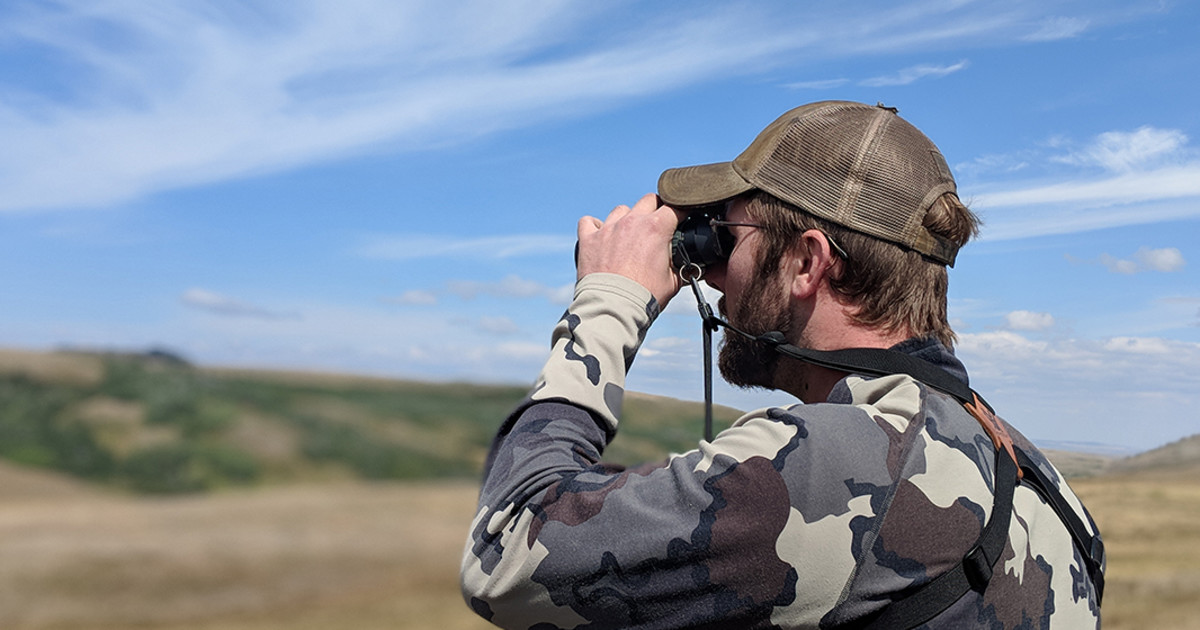
Best Hunting Binoculars Under $500: Expert Tested
Affiliate Disclosure: This article contains affiliate links. If you purchase through these links, we may earn a commission at no extra cost to you. This helps support our site and allows us to continue creating in-depth gear reviews. Our recommendations are based on independent testing and research.
Quality binoculars can make or break a hunt. Whether you're glassing a ridge for mule deer or scanning a tree line for whitetail movement, having the right optics separates a successful hunter from one who goes home empty-handed. After extensive field testing across multiple seasons, we've identified the best hunting binoculars under $500 for 2026.
Quick Comparison: Best Hunting Binoculars Under $500
Why Quality Binoculars Matter for Hunting
Your binoculars are arguably the most-used piece of gear in your kit. A typical western hunt involves 80% glassing and 20% stalking. Even eastern whitetail hunters benefit enormously from quality glass—spotting deer movement at first and last light, identifying antler characteristics before committing to a shot, and locating blood trails after the shot.
The difference between cheap binoculars and quality glass becomes most apparent in low-light conditions. Dawn and dusk—the golden hours of hunting—are when premium optics truly shine. Better glass transmits more light, producing brighter, clearer images when it matters most.
What to Look for in Hunting Binoculars
Magnification and Objective Lens
For hunting, 8x42 and 10x42 are the gold standard configurations. The first number (8x or 10x) indicates magnification power, while the second (42mm) indicates the objective lens diameter. Larger objective lenses gather more light but add weight.
- 8x42: Wider field of view, steadier handheld image, better in dense timber. Best all-around choice.
- 10x42: More magnification for western hunting, better for identifying game at distance. Slightly narrower field of view.
- 10x50: Maximum light gathering, but heavier. Best for dedicated glassing setups.
Glass Quality and Coatings
The quality of glass and lens coatings determines how much light reaches your eyes. Look for these terms:
- ED (Extra-low Dispersion) Glass: Reduces chromatic aberration (color fringing) for sharper images
- Fully Multi-Coated: All air-to-glass surfaces have multiple anti-reflective coatings. This is the minimum standard you should accept.
- Dielectric Coatings: Applied to prisms for maximum light transmission (99%+ reflectivity per surface)
Prism Type
Most quality hunting binoculars use roof prisms, which are more compact and durable than porro prisms. Within roof prisms, BaK-4 glass is superior to BK-7, offering better edge-to-edge sharpness.
Our Top Picks at a Glance
Quick Recommendations
- Best Overall Under $500: Vortex Diamondback HD 10x42 – Exceptional value with HD glass
- Best Budget Option: Vortex Crossfire HD 10x42 – Outstanding quality under $200
- Best Premium Under $500: Maven B.2 11x45 – Customizable, direct-to-consumer value
- Best for Low Light: Leupold BX-4 Pro Guide HD 10x42 – Superior twilight performance
- Best Compact: Nikon Monarch M5 8x42 – Lightweight with excellent glass
1. Vortex Diamondback HD 10x42 – Best Overall Under $500
The Vortex Diamondback HD has become the benchmark for mid-range hunting binoculars, and for good reason. These binoculars punch well above their price point, offering HD glass quality that rivals optics costing twice as much.
Key Features
- Magnification: 10x42
- Weight: 24.6 oz
- Field of View: 314 ft at 1,000 yards
- Eye Relief: 16mm
- Close Focus: 5 feet
- Lens Coatings: Fully multi-coated with dielectric coating
Field Performance
In our testing, the Diamondback HD produced crisp, bright images from dawn through dusk. Edge-to-edge clarity was impressive for this price range, and chromatic aberration was minimal even when glassing bright skylines. The rubber armor survived multiple drops onto rocky terrain without issue.
The twist-up eyecups worked smoothly and held position well—important for hunters who wear glasses. The center focus wheel had a satisfying resistance that prevented accidental adjustment while allowing quick focusing.
Pros and Cons
- Exceptional HD glass for the price
- Vortex VIP unconditional lifetime warranty
- Comfortable eye relief for glasses wearers
- Rugged, rubber-armored construction
- Slightly heavier than some competitors
- Included case is basic
2. Vortex Crossfire HD 10x42 – Best Budget Option
If you're looking for the best binoculars under $200, the Crossfire HD is the answer. Vortex managed to pack surprisingly good glass into an affordable package, making these the perfect entry point for new hunters or those on a tight budget.
Key Features
- Magnification: 10x42
- Weight: 25.4 oz
- Field of View: 306 ft at 1,000 yards
- Eye Relief: 16mm
- Lens Coatings: Fully multi-coated
Field Performance
The Crossfire HD won't compete with $400+ binoculars in low-light scenarios, but for the price, the image quality is remarkable. Colors are accurate, contrast is solid, and the resolution is more than adequate for identifying game at typical hunting distances. These are the binoculars we recommend for hunters who would rather spend their budget on boots and a quality pack.
3. Maven B.2 11x45 – Best Premium Under $500
Maven's direct-to-consumer business model allows them to offer premium glass at mid-range prices. The B.2 11x45 is a unique configuration that offers more magnification than standard 10x42s while maintaining excellent light transmission through the larger 45mm objective.
Key Features
- Magnification: 11x45
- Weight: 27.9 oz
- Field of View: 283 ft at 1,000 yards
- Eye Relief: 17.2mm
- Lens Coatings: Fully multi-coated with dielectric prism coating
- Customizable: Choose your own color combinations
Field Performance
The extra magnification over standard 10x binoculars is noticeable and appreciated for western hunting. Glass clarity rivals binoculars in the $600-800 range. Maven's build quality and attention to detail are apparent the moment you pick them up—the focus wheel is silky smooth, the eyecups are firm and precise, and the overall fit and finish is exceptional.
4. Leupold BX-4 Pro Guide HD 10x42 – Best for Low Light
Leupold's proprietary Twilight Max Light Management System makes the BX-4 Pro Guide the best choice for hunters who frequently find themselves glassing during those critical low-light periods. If your hunting style involves sitting in a stand from before dawn until after dark, these are your binoculars.
Key Features
- Magnification: 10x42
- Weight: 24.3 oz
- Field of View: 315 ft at 1,000 yards
- Eye Relief: 16mm
- Lens Coatings: Fully multi-coated with Twilight Max HD
Field Performance
In our dawn-and-dusk testing, the BX-4 Pro Guide consistently outperformed competing binoculars in light transmission. We could identify deer features 10-15 minutes longer into twilight compared to the Diamondback HD. The image was noticeably brighter and crisper during those crucial minutes when game is most active.
5. Nikon Monarch M5 8x42 – Best Compact
For hunters who prioritize weight savings without sacrificing optical quality, the Monarch M5 8x42 delivers. The 8x magnification provides a wider field of view that's perfect for thick timber hunting and quick target acquisition.
Key Features
- Magnification: 8x42
- Weight: 22.9 oz
- Field of View: 330 ft at 1,000 yards
- Eye Relief: 19.5mm
- Lens Coatings: Fully multi-coated with ED glass
How to Choose Between 8x and 10x
This is the most common question we get about hunting binoculars. Here's our simple rule:
8x vs 10x: The Quick Guide
Choose 8x if: You hunt in dense timber or thick brush, want a wider field of view for tracking moving game, have unsteady hands, or primarily hunt from tree stands at shorter ranges.
Choose 10x if: You hunt open country, need to identify game at distance, glass ridges and basins, or hunt western big game where glassing is critical.
Binocular Care Tips for Hunters
Your binoculars are a significant investment. Protect them with these field-proven practices:
- Use a harness: A quality binocular harness (like the Badlands Bino Basics) keeps your optics secure and accessible while distributing weight across your chest and shoulders.
- Clean properly: Use a lens pen or microfiber cloth. Never use clothing or paper products on coated lenses.
- Cap your lenses: Rain guards and objective caps prevent scratching and debris buildup.
- Store properly: Keep binoculars in a cool, dry place with caps on to prevent dust and fungal growth on internal elements.
Frequently Asked Questions
Are expensive binoculars worth it for hunting?
It depends on your hunting style. If you spend significant time glassing in low-light conditions or hunt western big game where you might glass for hours, premium optics are a worthwhile investment. For eastern whitetail hunters who primarily hunt from stands, mid-range binoculars like the Diamondback HD are more than adequate.
Can I use binoculars with glasses?
Absolutely. Look for binoculars with at least 16mm of eye relief (the distance between the eyepiece and where the full image forms). All five of our top picks offer excellent eye relief for glasses wearers.
Should I get 8x42 or 10x42 for deer hunting?
For most deer hunting scenarios, 10x42 is the more versatile choice. The extra magnification helps with identifying deer at distance and evaluating antlers. However, if you exclusively hunt dense hardwood timber, 8x42 provides a wider, brighter field of view that's better for tracking movement.
Final Verdict
For most hunters, the Vortex Diamondback HD 10x42 represents the best combination of optical quality, durability, and value. Backed by Vortex's legendary unconditional warranty, these binoculars will serve you faithfully for years of hard hunting. If budget is tight, don't overlook the Crossfire HD—it proves you don't need to spend a fortune to get reliable hunting glass.
Whatever you choose, remember: the best binoculars are the ones you actually carry. Choose a pair that fits your hunting style, budget, and weight preferences, and use them relentlessly. More time behind glass means more filled tags.
How to Use Binoculars Effectively in the Field
Owning quality glass is only half the equation. How you use binoculars in the field determines whether they help you fill tags or just add weight to your pack. Most hunters underuse their binoculars — they glass for 30 seconds, see nothing obvious, and put them away. That's not glassing; that's glancing.
The Grid Pattern
Effective glassing follows a systematic grid pattern. Divide the terrain in front of you into imaginary sections. Start at the nearest cover edge and slowly scan left to right, then move your focus 50 yards deeper and scan right to left. Continue this pattern until you've covered all visible terrain. A thorough scan of 500 yards of habitat should take 5-10 minutes minimum.
You're not looking for whole deer — you're looking for parts of deer: the horizontal line of a back against vertical tree trunks, the flick of an ear, the white patch of a throat, the curve of an antler tine. Your brain needs time to process each section of terrain. Rushing means missed deer.
When to Glass
Glass during transition periods — the first and last 90 minutes of daylight — when deer are most likely to be on their feet and visible. During midday, focus on bedding areas where you might spot an ear or antler tip above the brush. After a rain, deer often stand and feed in the open, making midday glassing productive.
Reducing Shake
Hand tremor magnified through 10x binoculars turns a clear image into a shaky mess. Brace your binoculars against a tree trunk, trekking pole, or your pack to stabilize the image. Some hunters use a lightweight tripod adapter that turns binoculars into a steady spotting system for extended glassing sessions.
Binocular Care and Maintenance
Hunting binoculars take abuse — rain, dust, drops, temperature swings, and the occasional submersion in a creek crossing. Proper care extends their life and maintains the optical clarity you paid for.
Cleaning Lenses
Never wipe lenses with a dry cloth — grit on the surface scratches coatings. Use a lens brush or compressed air to remove dust first, then clean with a microfiber cloth dampened with lens cleaning solution. Work from the center of the lens outward in gentle circular motions. Clean the eyepieces frequently — the oils from your skin and eyelashes degrade coatings over time.
Fog Prevention
Bring binoculars from a warm truck into cold air and internal fogging can obscure your view for 20 minutes. Prevent this by storing binoculars outside your insulated layers during transport — let them equalize to ambient temperature gradually. If fogging occurs, open the lens caps and let air circulate. Nitrogen or argon-purged binoculars resist internal fogging, but external condensation still occurs.
Storage
Store binoculars in a dry environment with lens caps on. For long-term off-season storage, place silica gel packets in the case to absorb residual moisture. Avoid storing in vehicles where extreme heat degrades rubber armor and lens cement. A climate-controlled closet is ideal.
Binoculars vs. Spotting Scopes
For western hunters glassing open terrain at 500+ yards, a spotting scope (20-60x magnification) supplements binoculars for identifying distant animals and judging trophy quality. But a spotting scope doesn't replace binoculars — it's a secondary tool used to examine targets your binoculars have already found.
For eastern whitetail hunters in timber, a spotting scope is rarely useful. The viewing distances are too short and the terrain too enclosed for high magnification. A quality 10x42 binocular covers 95% of eastern hunting situations.
Invest in binoculars first, always. If your hunting style demands it, add a spotting scope later. No piece of hunting optics improves your success rate more than a quality binocular used consistently and skillfully.
Where to Buy Binoculars
Check Price on Amazon →
Check Price on Amazon →
Check Price on Amazon →
Check Price on Amazon →
Get More Gear Guides
Join 10,000+ hunters and get our free Ultimate Gear Checklist plus weekly reviews delivered to your inbox.
Share this guide:
Related Articles
Spring Outdoor Gear Essentials 2026: Fishing, Camping & Turkey Season
Complete spring outdoor gear guide covering coolers, tackle boxes, fishing lures, camping chairs, bug protection, and turkey season essentials. YETI, RTIC, Plano, Thermacell, and more reviewed with prices.
Best Fishing Rod & Reel Combos 2026: Bass, Walleye & Panfish Picks
Expert-tested rod and reel combos from $60 to $500. Shimano, Abu Garcia, St. Croix, Lew's and Daiwa compared. Spinning vs baitcasting, power/action guide, and best combo for every species and technique.
Best Fish Finders for 2026: Sonar, GPS & Live Imaging Compared
Expert-tested fish finder reviews from $200 to $2,000+. Garmin ECHOMAP, Lowrance HOOK, Humminbird HELIX compared. Sonar types explained, GPS mapping, live imaging technology & installation guide for kayak, bass boat & ice fishing.