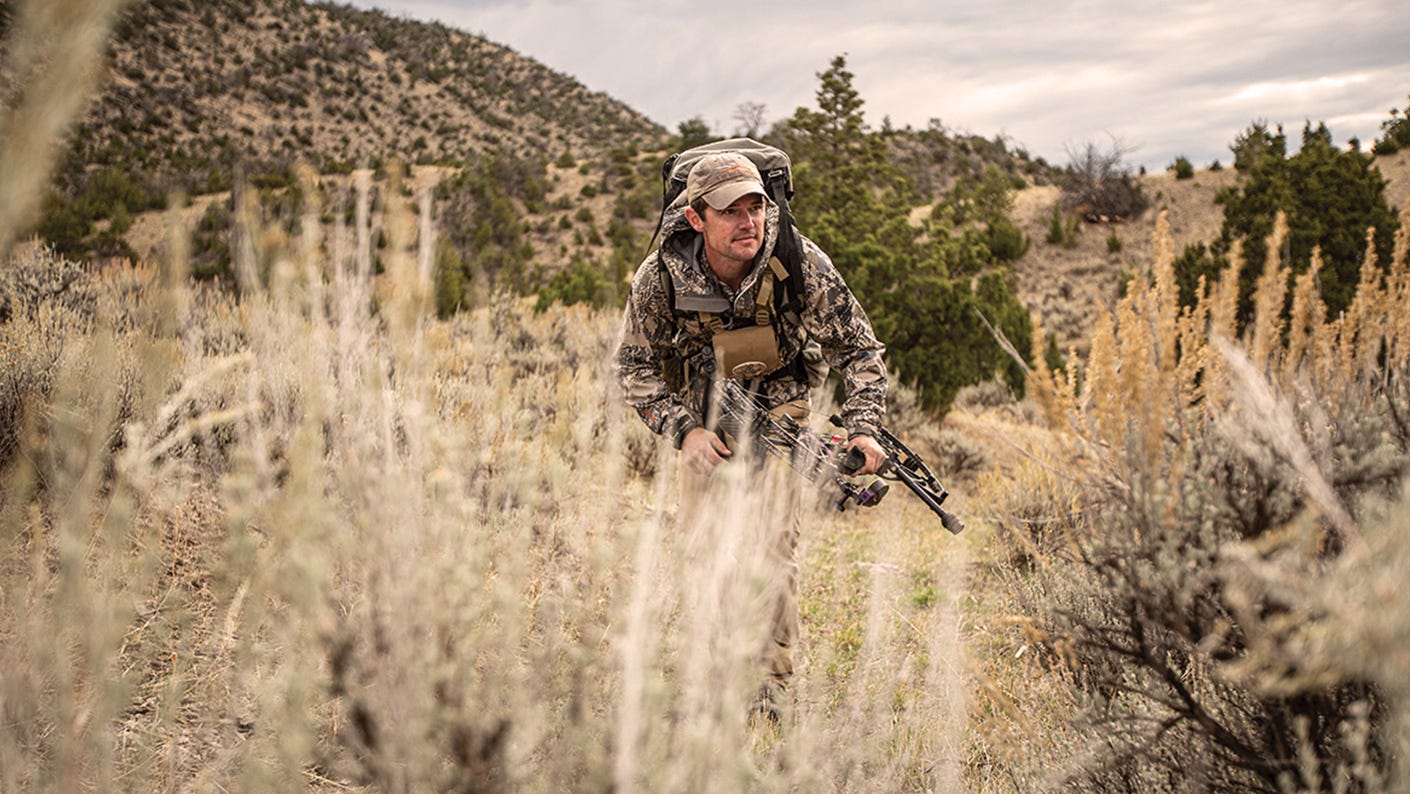
Best Rangefinders for Hunting 2026: Tested & Ranked
Affiliate Disclosure: This article contains affiliate links. If you purchase through these links, we may earn a commission at no extra cost to you. This helps support our site and allows us to continue creating in-depth gear reviews. Our recommendations are based on independent testing and research.
A quality rangefinder eliminates the guesswork from shot placement, turning what used to be an educated guess into a precise measurement. Whether you're a bowhunter who needs exact yardage or a rifle hunter ranging across canyons, the right rangefinder is essential gear. Here are the best hunting rangefinders for 2026, tested in real field conditions.
Quick Comparison: Best Rangefinders at a Glance
Why Every Hunter Needs a Rangefinder
Before rangefinders became affordable, hunters relied on experience and landmarks to estimate distance. A veteran hunter might be accurate to within 10 yards at 200 yards—but that 10-yard error margin could mean the difference between a clean kill and a wounded animal. Modern laser rangefinders eliminate that uncertainty, giving you precise distances in fractions of a second.
For bowhunters, rangefinders are arguably even more critical. Arrow trajectory is far more affected by distance than bullets, and a 5-yard error at 40 yards can mean a complete miss or worse, a gut-shot animal. There's simply no excuse for not ranging your target before shooting.
Key Features to Consider
Maximum Range vs. Effective Range
Manufacturers love to advertise maximum ranges of 1,000+ yards, but these numbers are measured on highly reflective targets under ideal conditions. Real-world performance on game animals is typically 40-60% of the advertised max. A rangefinder rated for 1,200 yards might reliably range a deer at 500-700 yards.
Angle Compensation
If you hunt hilly or mountainous terrain, angle compensation is essential. When shooting at steep angles (uphill or downhill), the horizontal distance to your target is shorter than the line-of-sight distance. Angle-compensated rangefinders calculate the true ballistic distance, giving you the holdover or dial-up for an accurate shot.
Speed and Accuracy
In hunting situations, you often have seconds to range and shoot before an animal moves. The best rangefinders return readings in under half a second. Look for models with a responsive trigger and fast processing.
Our Top Picks at a Glance
Quick Recommendations
- Best Overall: Leupold RX-1400i TBR/W – Trusted performance at a fair price
- Best Premium: Sig Sauer KILO2400BDX – Applied ballistics integration
- Best Budget: Vortex Impact 1000 – Best rangefinder under $200
- Best for Bowhunting: Leupold RX-Fulldraw 5 – Purpose-built for archery
- Best Long Range: Vortex Razor HD 4000 GB – Extended range with ballistics
1. Leupold RX-1400i TBR/W – Best Overall
The RX-1400i represents Leupold's commitment to making quality optics accessible. With True Ballistic Range/Wind (TBR/W) technology, this rangefinder doesn't just give you distance—it calculates the hold point based on your specific ballistic profile and even accounts for wind.
Key Features
- Max Range: 1,400 yards (reflective), ~900 on deer
- Magnification: 5x
- Display: Red OLED with multiple reticle options
- Angle Compensation: Yes, TBR/W technology
- Weight: 7.8 oz
- Water Resistance: IPX4
Field Performance
In our testing, the RX-1400i consistently ranged deer-sized targets out to 850 yards in varied lighting conditions. The OLED display is bright enough to read in direct sunlight and dims appropriately in low light. Battery life is exceptional—we went through an entire season without changing the CR2 battery.
2. Sig Sauer KILO2400BDX – Best Premium
The KILO2400BDX is part of Sig's BDX (Ballistic Data Xchange) ecosystem, which pairs the rangefinder with compatible Sig riflescopes for an integrated solution. Range a target, and the holdover dot in your BDX scope automatically adjusts. It's the closest thing to a fire-and-forget system available to hunters.
Key Features
- Max Range: 3,400 yards (reflective), ~1,400 on deer
- Magnification: 7x
- Display: Blue OLED with Bluetooth connectivity
- Angle Compensation: Yes, Applied Ballistics Ultralight
- Weight: 12.4 oz
- Connectivity: Bluetooth to BDX scopes and app
3. Vortex Impact 1000 – Best Budget
The Impact 1000 proves you don't need to spend big money for reliable ranging. At under $200, it's the best entry-level rangefinder available, offering core functionality without unnecessary bells and whistles.
Key Features
- Max Range: 1,000 yards (reflective), ~600 on deer
- Magnification: 6x
- Display: LCD
- Angle Compensation: Yes, HCD (Horizontal Component Distance)
- Weight: 6.6 oz
4. Leupold RX-Fulldraw 5 – Best for Bowhunting
Purpose-built for archery, the RX-Fulldraw 5 is designed around a bowhunter's specific needs. Instead of giving you ballistic holdovers, it displays the exact pin to use based on your bow setup, arrow speed, and pin configuration. It takes the math out of steep-angle shots that commonly trip up bowhunters.
Key Features
- Max Range: 1,100 yards (reflective), ~650 on deer
- Magnification: 6x
- Archery Mode: Displays pin number and holdover
- Angle Compensation: Yes, with Flightpath technology
- Weight: 7.4 oz
5. Vortex Razor HD 4000 GB – Best Long Range
For western hunters who need to range across canyons and basins, the Razor HD 4000 GB delivers unmatched distance capability with GeoBallistics integration for precise long-range holds.
Key Features
- Max Range: 4,000 yards (reflective), ~2,000 on deer
- Magnification: 7x
- Display: Red OLED
- Angle Compensation: Yes, with GeoBallistics solver
- Weight: 11.2 oz
Rangefinder Tips for the Field
- Pre-range landmarks: When you set up in a stand or blind, range trees, rocks, and trails at known distances so you have reference points when game appears.
- Practice one-handed operation: You should be able to range quickly and quietly without taking your eyes off the animal for long.
- Keep it accessible: Mount your rangefinder on your bino harness or use a magnetic holder so it's always within reach.
- Always range twice: Confirm your reading, especially on long-range shots. A tree branch between you and the target can give false readings.
Final Verdict
For most hunters, the Leupold RX-1400i TBR/W offers the best balance of accuracy, speed, and features for the money. Bowhunters should seriously consider the RX-Fulldraw 5 for its archery-specific functionality. And budget-conscious hunters can't go wrong with the Vortex Impact 1000—it does everything a hunter needs at a fraction of the cost.
How to Use a Rangefinder Effectively
A rangefinder on your hip that you never use is just dead weight. The hunters who benefit most from rangefinders are the ones who range constantly — not just when a deer appears, but throughout the entire hunt. Here's how to maximize your rangefinder's value in the field.
Pre-Ranging Your Hunting Area
The moment you settle into your stand or blind, range every significant landmark around your position: that distinctive oak tree, the edge of the food plot, the creek crossing, the trail intersection. Mentally catalog these distances so you know instantly where a deer stands when it appears. This eliminates fumbling for your rangefinder during the critical seconds when a buck steps into view.
For bowhunters, pre-range in 10-yard increments from 20 to 60 yards in every direction you might shoot. For rifle hunters, range key features at 100, 200, 300, and 400 yards. When a deer appears near a pre-ranged landmark, you already know the distance without reaching for the rangefinder.
Ranging Through Vegetation
Dense brush and leaves between you and the target confuse rangefinders. The laser may hit a branch and give you the distance to the brush rather than the deer behind it. Most quality rangefinders offer a "last target" mode that ignores closer objects and reports the distance to the farthest target the laser reaches. Use this mode in heavy cover. In "first target" or "closest target" mode, the rangefinder reports the nearest object the laser hits — useful when ranging through a window in the vegetation.
Angle Compensation
If you hunt from an elevated treestand or on steep terrain, angle compensation is essential. The straight-line distance from your stand to a deer below is longer than the horizontal distance your arrow or bullet actually travels. Without compensation, you'll shoot high on steep-angle shots. Quality rangefinders with TBR (True Ballistic Range) automatically calculate the horizontal equivalent distance, giving you the number that actually matters for your holdover or sight pin.
Example: A deer standing 30 yards from your treestand at a 25-degree angle below you has a horizontal distance of about 27 yards. If you aim using 30-yard pins, your arrow flies over the deer's back. With TBR engaged, the rangefinder displays 27 yards — the distance you should shoot for.
Rangefinder Maintenance
Battery Management
Always carry a spare battery. Most rangefinders use CR2 or CR123 batteries that last 1,000-3,000 actuations. Cold weather reduces battery performance dramatically — a battery that shows half charge in October may die completely in December's cold. Keep spare batteries in an inside pocket close to your body where warmth preserves their charge.
Lens Care
Rangefinder lenses require the same care as binocular lenses. Clean with a lens brush first to remove grit, then wipe with a microfiber cloth. Never touch the laser emitter lens with your fingers — oils from your skin can scatter the laser beam and reduce ranging accuracy. A lens pen is the most convenient field cleaning tool for rangefinders.
Waterproofing
Most hunting rangefinders are rated IPX4 or higher for water resistance. However, prolonged exposure to heavy rain can eventually compromise seals. After wet hunts, dry the rangefinder thoroughly and store with battery compartment open to allow any moisture to evaporate. Storing a damp rangefinder in a sealed case promotes internal condensation that can fog the optics.
Rangefinder Accessories Worth Buying
- Tether/lanyard: A rangefinder dropped from a 20-foot treestand is a rangefinder destroyed. A quality tether keeps your investment attached to your body or stand at all times.
- Magnetic mount: Magnetic holsters attach the rangefinder to a metal surface on your bow riser or stand for instant access. Faster than pulling from a pocket or pouch.
- Carrying case: The included case with most rangefinders is usually adequate, but aftermarket cases with belt loops or MOLLE attachment provide more secure, accessible carry options.
Rangefinder Features Worth Paying For (And Those That Aren't)
The rangefinder market is loaded with features. Here's what actually matters in the field versus what's marketing fluff:
Worth the Money
- Angle compensation: Essential for treestand and mountain hunters. Without it, you'll over-estimate the effective distance on steep angles, leading to high shots. Every rangefinder above $200 should include this — if it doesn't, pass.
- Scan mode: Continuously ranges as you pan across terrain. Invaluable for tracking a moving animal or quickly ranging multiple shooting lanes from a new stand setup.
- 7x magnification: The standard 6x magnification works for most situations, but 7x or 8x provides enough extra detail to identify antler points and confirm target identity at distance. Worth the modest price premium.
Not Worth the Premium
- Ranging beyond 1,000 yards: Unless you're a competitive long-range shooter, you'll never ethically shoot game at these distances. A rangefinder that maxes at 800 yards on reflective targets (500 on deer-sized animals) covers every reasonable hunting scenario.
- Bluetooth connectivity: Syncing range data to your phone sounds useful but adds complexity, battery drain, and cost. In practice, very few hunters use this feature after the first week.
- Built-in ballistic calculators: These attempt to calculate holdover based on your specific cartridge. In theory, helpful. In practice, the inputs are rarely accurate enough to trust at distances where holdover matters. A phone app with your verified ballistic data is more reliable and costs nothing extra.
- OLED displays: Some premium rangefinders use OLED displays for brighter readouts. While nice, a quality LCD display is perfectly readable in all hunting conditions. The $100-150 premium for OLED doesn't improve your ranging ability.
Rangefinder Practice Makes Perfect
Like any skill, ranging becomes faster and more instinctive with practice. Range objects during walks, while driving, and from your backyard. Estimate the distance first, then verify with the rangefinder. Over time, your natural distance estimation improves dramatically — useful for situations when you don't have time to range (a buck crossing a gap in the brush at a trot, for example). The goal isn't to replace your rangefinder with guesswork, but to develop a reliable backup skill and faster target-to-range-to-shot sequence when seconds count.
A rangefinder eliminates the single most common cause of missed shots in hunting: incorrect range estimation. The difference between 35 and 42 yards might not seem significant, but for a bowhunter, that 7-yard error means the difference between a double-lung hit and a gut shot. Carry your rangefinder on every hunt, range landmarks immediately upon setup, and use it until ranging becomes as automatic as drawing your bow or shouldering your rifle. The confidence a rangefinder provides at the moment of truth is priceless — never leave camp without one clipped to your harness or riding in your chest pocket.
Where to Buy Rangefinders
Check Price on Amazon →
Check Price on Amazon →
Check Price on Amazon →
Check Price on Amazon →
Get More Gear Guides
Join 10,000+ hunters and get our free Ultimate Gear Checklist plus weekly reviews delivered to your inbox.
Share this guide:
Related Articles
Spring Outdoor Gear Essentials 2026: Fishing, Camping & Turkey Season
Complete spring outdoor gear guide covering coolers, tackle boxes, fishing lures, camping chairs, bug protection, and turkey season essentials. YETI, RTIC, Plano, Thermacell, and more reviewed with prices.
Best Fishing Rod & Reel Combos 2026: Bass, Walleye & Panfish Picks
Expert-tested rod and reel combos from $60 to $500. Shimano, Abu Garcia, St. Croix, Lew's and Daiwa compared. Spinning vs baitcasting, power/action guide, and best combo for every species and technique.
Best Fish Finders for 2026: Sonar, GPS & Live Imaging Compared
Expert-tested fish finder reviews from $200 to $2,000+. Garmin ECHOMAP, Lowrance HOOK, Humminbird HELIX compared. Sonar types explained, GPS mapping, live imaging technology & installation guide for kayak, bass boat & ice fishing.