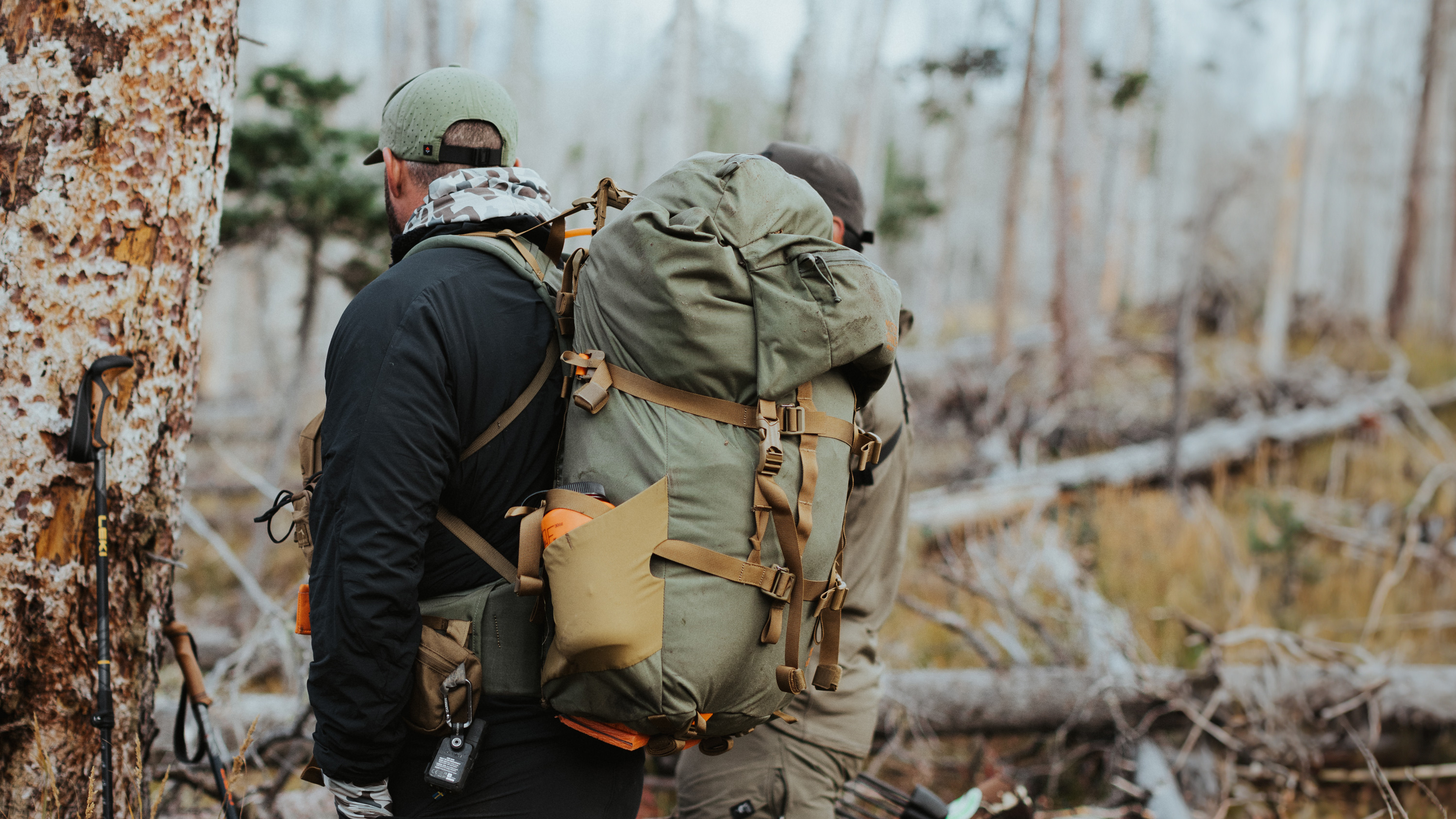
Mystery Ranch Metcalf Review: Ultimate Elk Pack?
Affiliate Disclosure: This article contains affiliate links. If you purchase through these links, we may earn a commission at no extra cost to you. This helps support our site and allows us to continue creating in-depth gear reviews. Our recommendations are based on independent testing and research.
The Mystery Ranch Metcalf has become legendary in elk hunting circles — the pack that serious backcountry hunters recommend to other serious backcountry hunters. At $400+, it's a significant investment. After carrying the Metcalf on three backcountry elk hunts totaling 180+ miles with loads up to 85 pounds, here's our thorough, honest assessment.
Why the Metcalf Exists
Mystery Ranch was founded by Dana Gleason, the same designer behind the original Dana Design packs that backcountry hunters worshipped in the 1990s. When he started Mystery Ranch, he applied the same philosophy: build packs so tough and well-designed that they become invisible on your back — you stop thinking about your pack and start thinking about hunting.
The Metcalf was designed specifically for multi-day backcountry elk hunts. This means it needed to handle three very different roles: carry 40-50 pounds of gear into camp, perform as a light daypack for hunting from camp, and haul 75-100+ pounds of meat and cape out. Most packs excel at one of these roles and compromise on the others. The Metcalf attempts to nail all three.
Key Specifications
Metcalf Specs
- Volume: 4,500 cubic inches (72 liters) expandable to 5,800+ with overload shelf
- Weight: 6 lbs 12 oz (frame, bag, and lid)
- Frame: Carbon fiber/HDPE Guide Light MT frame
- Load Rating: 150+ lbs (frame-rated)
- Fabric: 500D Cordura (main body), 330D Lite Plus (secondary panels)
- Access: Tri-Zip opening, top loading, side zip panel
- Sizes: S, M, L, XL (based on torso length)
- Price: ~$430
The Guide Light MT Frame
The frame is the heart of any load-hauling pack, and the Metcalf's Guide Light MT frame is where Mystery Ranch justifies the premium price. It uses a carbon fiber and HDPE composite that transfers weight from the bag directly to the hip belt, bypassing your shoulders almost entirely at heavy loads.
In practical terms, this means when you're carrying 80 pounds of quartered elk meat, the weight sits on your hips rather than pulling your shoulders down. Your shoulders guide the pack; your hips carry it. This distinction becomes critically important at mile 6 of a meat pack-out when your body is already depleted from the hunt and the butchering.
The frame also features an adjustable yoke that lets you fine-tune the torso length within each size range. Getting this adjustment right is essential — a quarter-inch difference in yoke position can transform the pack from uncomfortable to invisible. Take time during initial setup to dial this in, ideally with a loaded pack.
The Tri-Zip Design
Mystery Ranch's signature Tri-Zip opening is one of those features that sounds like a gimmick until you use it. Three full-length zippers allow the main bag to open completely flat — like unzipping a duffel bag. This provides complete access to everything in the pack without digging from the top.
In the field, Tri-Zip matters most during two scenarios: packing camp in the dark (you can see and reach everything instead of fishing around by headlamp) and loading meat (you can lay the bag flat, stack quarters directly on the frame shelf, and zip the bag around the load). Both situations happen regularly on backcountry hunts, and both are dramatically easier with Tri-Zip access.
Field Testing: Three Elk Hunts
Hunt 1: Colorado Unit 76 — September Archery
The first outing was a 5-day archery elk hunt operating from a spike camp at 10,200 feet. I packed in with approximately 48 pounds: shelter, sleep system, food, water, cooking kit, optics, hunting gear. The 6.5-mile hike gained 2,400 feet of elevation.
First impression at load: the hip belt immediately took the weight. By the time I had the sternum strap and load lifters adjusted, my shoulders carried maybe 15% of the total load. After the first mile, I stopped noticing the pack entirely — which is exactly the point.
The compression straps kept the load tight and close to my body during steep switchbacks. Side pockets held water bottles accessible without removing the pack. The lid pocket swallowed my rain jacket, headlamp, snacks, and rangefinder for quick access.
From spike camp, I hunted with a reduced load of about 15 pounds (water, rain gear, food, calls, weapon). At 15 pounds, the Metcalf is overkill — it's a big pack for day hunting, and a dedicated 2,000-cubic-inch daypack would be lighter and more nimble. But carrying two packs into the backcountry isn't practical, so the Metcalf's ability to function adequately as a daypack is a necessary compromise.
Hunt 2: Idaho Unit 27 — October Rifle
This hunt delivered the moment every backcountry hunter plans for: a bull on the ground 7.5 miles from the truck, at the bottom of a steep drainage. This is where the Metcalf's frame and load shelf system prove their worth.
After quartering the bull, I loaded two hind quarters plus the backstraps onto the Metcalf using the overload shelf — the external frame shelf below the main bag that extends the pack's capacity for bulky loads. Total weight: approximately 85 pounds.
The hike out took 5.5 hours over 7.5 miles with 1,800 feet of elevation gain. The Metcalf carried this load as well as any pack I've used. The frame transferred weight to my hips effectively, and the load shelf kept the meat centered and stable. My shoulders were tired but not destroyed. My hips did the real work, which is exactly how a well-designed pack should function under maximum load.
At 85 pounds, nothing is comfortable. But the Metcalf managed the load without any frame flex, strap failure, or balance issues. I've seen lesser packs develop frame creaks, strap stretch, and buckle failures under these loads. The Metcalf was solid.
Hunt 3: Montana Public Land — November Rifle
The final test was a 3-day hunt from a truck camp, using the Metcalf as an oversized daypack. Loaded with 20-25 pounds of gear including water, food, rain gear, game bags, and a lightweight tripod, the pack was only about 40% full.
This highlighted the Metcalf's one real weakness: it's too much pack for day hunting. At 6 lbs 12 oz empty, it's nearly 3 pounds heavier than a purpose-built daypack like the Badlands 2200. When you're not planning to haul meat, that extra weight is dead weight on your back.
The compression straps helped cinch the half-empty pack down to a reasonable profile, and the load carried fine. But I found myself wishing for a lighter, more streamlined pack on steep climbs where every ounce matters.
Pros and Cons
What the Metcalf Does Right
- Load transfer: Best-in-class weight distribution from pack to hip belt. At 70+ pounds, the difference between the Metcalf and lesser packs is dramatic.
- Build quality: 500D Cordura shrugs off brush, rocks, and abrasion. After 180+ miles, my pack shows zero structural wear.
- Tri-Zip access: Full-bag opening is genuinely useful, not a gimmick.
- Overload shelf: Extends capacity for meat hauling without bolting on external accessories.
- Warranty: Mystery Ranch's unconditional lifetime warranty is among the best in the industry.
Where It Falls Short
- Weight: 6 lbs 12 oz is heavy for a pack this size. Competitors like Stone Glacier and Kifaru offer comparable load carrying at lower pack weights.
- Day hunting: Too large and heavy for dedicated day hunts when meat hauling isn't planned.
- Water bottle access: Side pockets work but aren't as accessible as some competitors' designs while the pack is on your back.
- Price: At $430, it's a serious investment. Stone Glacier's Krux at $375 and Badlands 2200 at $300 offer strong alternatives at lower prices.
Metcalf vs. the Competition
Pack Comparison
- vs. Stone Glacier Krux: Krux is lighter by nearly 2 lbs with comparable load hauling. Stone Glacier wins on weight; Mystery Ranch wins on durability and bag access.
- vs. Kifaru Reckoning: Kifaru's modular system offers more customization. Heavier than Metcalf. Kifaru wins for the hunter who wants to build a custom system; Metcalf wins as a complete out-of-box solution.
- vs. Badlands 2200: The 2200 is a better daypack at half the price, but it can't carry 80-pound loads. Different tools for different jobs.
- vs. Exo Mountain K3: The K3 is lighter and more packable. Metcalf has a more comfortable hip belt and better organization. K3 wins for ultralight hunters; Metcalf wins for comfort during long carries.
Who Should Buy the Metcalf?
The Metcalf Is For You If:
- You do multi-day backcountry hunts where meat hauling is expected
- You need one pack that handles camp-in, day hunting, and pack-out
- Maximum load comfort at 70+ pounds is a priority
- You hunt hard enough to justify a lifetime investment in a premium pack
Look Elsewhere If:
- You primarily day hunt from a truck camp — the Metcalf is overkill
- Ultralight is your priority — Stone Glacier and Exo are lighter options
- Your budget is under $300 — the Badlands 2200 is the best value at this price point
The Bottom Line
Metcalf Setup and Adjustment Guide
The Metcalf's performance depends heavily on proper torso length adjustment and load lifter tuning. Here's how to set it up correctly:
- Torso measurement: The Metcalf comes in three frame sizes (S, M, L). Measure from your C7 vertebra (the bony bump at the base of your neck) to the top of your hip bones. S fits 15-18", M fits 18-21", L fits 21-24". Getting this wrong ruins the entire carrying experience.
- Hip belt positioning: The hip belt should wrap around your iliac crest — the top of your hip bones, not your waist. Most of the pack's weight (60-70%) should transfer through the hip belt to your legs. If weight sits on your shoulders after proper adjustment, the frame size is wrong.
- Load lifter straps: These connect the top of the shoulder straps to the pack frame. When properly tensioned (at a 45-degree angle), they pull the top of the pack toward your body, preventing it from pulling you backward on steep terrain. Loosen them for flat terrain, tighten them for climbs and heavy loads.
- Sternum strap: Position at mid-chest and buckle snug but not tight. This prevents shoulder straps from sliding off during lateral movement and side-hill traverses. Adjust height for comfort — too high restricts breathing, too low provides no stability.
Metcalf Modifications Worth Making
Out of the box, the Metcalf is excellent. A few simple modifications make it even better. Replace the stock sternum strap buckle with a magnetic buckle ($8) for silent, one-handed operation. Add a lightweight bow/rifle sling attachment if the stock system doesn't accommodate your specific weapon. Attach a small gear pouch to the hip belt for quick-access items like a wind checker, lip balm, and energy gel. These small customizations cost under $30 total and meaningfully improve the pack's functionality for your specific hunting style.
Pack Weight Training
The Metcalf carries heavy loads effectively, but your body needs preparation too. Before any backcountry elk hunt, train with a loaded pack for at least 6 weeks. Start with 30 pounds and add 5 pounds per week until you're comfortable with 60-70 pounds over uneven terrain. Focus on uphill hiking with a loaded pack — this simulates the pack-out reality that catches unprepared hunters off guard. A hunter who can comfortably carry 70 pounds up a mountain is a hunter who can get elk meat back to the truck without leaving anything behind.
Metcalf Durability: Long-Term Ownership Report
After multiple seasons of hard use, the Metcalf shows its quality. The 500D Cordura body fabric resists abrasion from rock scrambles and brush contact better than lighter packcloth used by competitors. Zippers remain smooth. Buckles don't crack in cold weather. The frame stays true even after repeated heavy loads. The one weak point: the bottom panel takes the most abuse from being set on rocks and rough ground. Adding a lightweight pack tarp or placing the pack on a game bag when setting it down extends the bottom panel's life considerably.
The Mystery Ranch Metcalf is the pack I'd choose if I could only own one backcountry hunting pack. It's not the lightest. It's not the cheapest. But when you're 8 miles from the truck with 85 pounds of elk meat on your back, nothing else I've carried handles that moment better. After 52 years of hunting and too many packs to count, the Metcalf is the one I trust when the load is heavy and the miles are long. That trust is worth $430.
Where to Buy the Metcalf Pack
Check Price on Amazon →
Check Price on Amazon →
Check Price on Amazon →
Get More Gear Guides
Join 10,000+ hunters and get our free Ultimate Gear Checklist plus weekly reviews delivered to your inbox.
Share this guide:
Related Articles

Vortex Diamondback HD vs Crossfire II: Which Binos?
Vortex's two most popular hunting binoculars go head-to-head. After extensive field testing, here's the definitive comparison to help you choose between the Diamondback HD and Crossfire II.

Irish Setter Elk Tracker Review: 1,000 Mile Test
Most boot reviews test for a weekend. We put the Irish Setter Elk Tracker through 1,000 miles of actual hunting terrain over two full seasons. Here's what held up and what didn't.
Sitka Gear Review: Is the Premium Price Worth It?
Sitka Gear is the gold standard of hunting clothing — but at $2,000+ for a full system, is it worth the premium? After three seasons of field testing, here's our honest verdict.