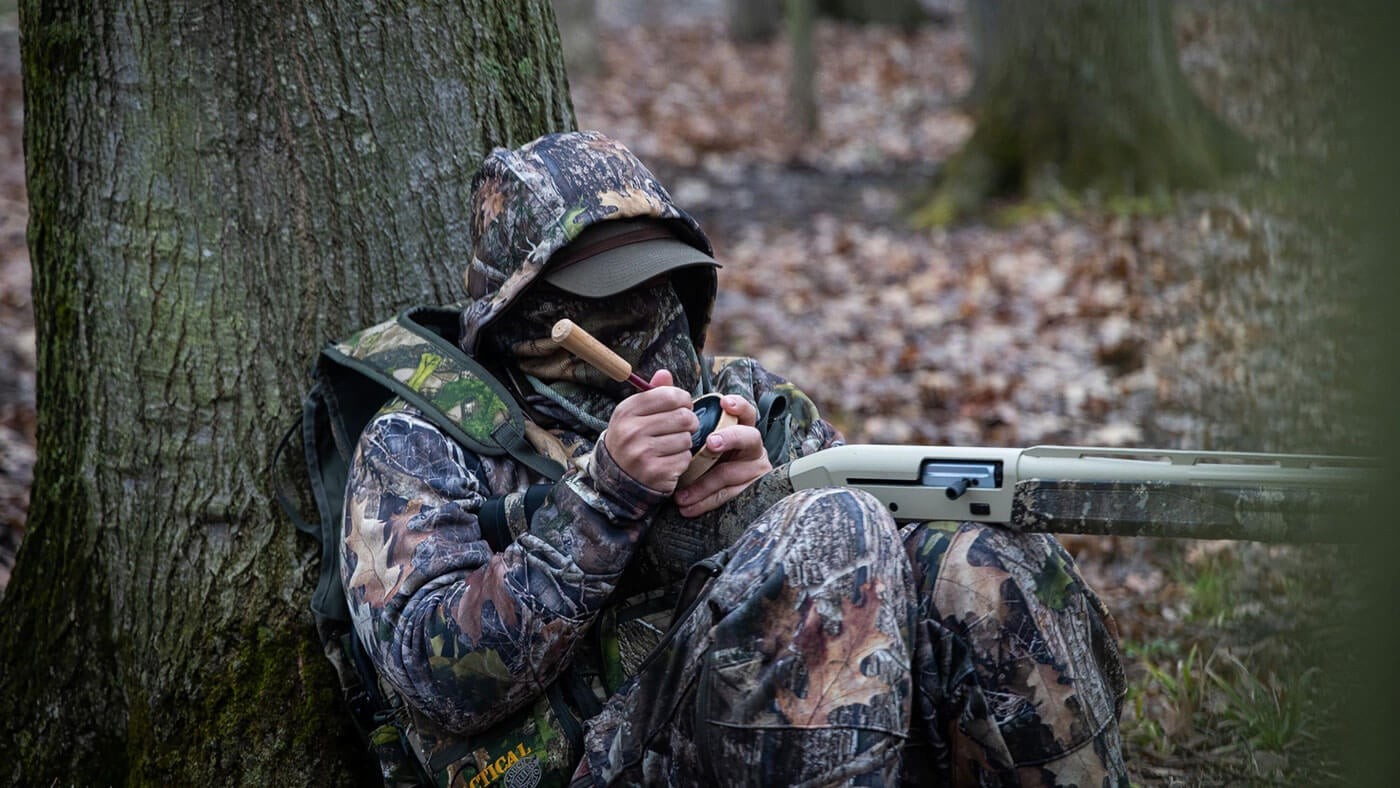
How to Call Turkeys: Complete Guide for Spring Season
Affiliate Disclosure: This article contains affiliate links. If you purchase through these links, we may earn a commission at no extra cost to you. This helps support our site and allows us to continue creating in-depth gear reviews. Our recommendations are based on independent testing and research.
Turkey calling is the most interactive and emotionally charged form of hunting communication. Unlike deer hunting, where you sit silently and wait, turkey hunting is a conversation. You speak the bird's language, he answers, and the chess match begins. Get it right and a fired-up gobbler comes strutting into your lap. Get it wrong and he hangs up at 80 yards, gobbling insults before walking the other direction.
I've been chasing spring gobblers for over 40 years, and I still feel the hair stand up on my neck when a tom hammers back at my first yelps of the morning. The calling is what makes turkey hunting addictive. This guide covers everything from the basic vocabulary you need to the advanced situational strategies that close the deal on stubborn birds.
The Turkey Vocabulary: Calls You Must Know
Wild turkeys have a complex language with more than 28 distinct vocalizations. Fortunately, you only need to master five or six calls to be an effective hunter. Here are the essentials, in order of importance:
The Yelp
The yelp is the foundational turkey call—the one you'll use 70% of the time. It's a hen's basic communication call, essentially saying "I'm here" to other turkeys. A series of 5-8 yelps at moderate volume is your go-to call for locating gobblers, initiating conversation, and maintaining contact.
How it sounds: "Kee-awk, kee-awk, kee-awk"—a two-note call with a higher-pitched first note dropping to a lower second note. The rhythm is steady, roughly one yelp per second.
When to use it: Opening sequence at first light. Every 15-20 minutes when prospecting for gobblers. As a response when a gobbler answers your calls. The plain yelp is the safest, most universal turkey call.
The Cluck
Short, sharp single notes that mean "pay attention" or "I'm right here." Clucks are low-volume, close-range calls used when a gobbler is approaching and you want to give him a precise target to walk toward without spooking him with loud yelping.
How it sounds: "Putt"—a short, sharp pop. One to three clucks at a time, with several seconds between sequences.
When to use it: When a gobbler is within 100 yards and closing. When a bird is hung up and needs gentle reassurance that the hen is still there. Combined with purrs for the most seductive close-range sequence.
The Purr
A soft, rolling, contented sound that turkeys make while feeding and moving calmly. Purring communicates relaxation and safety—exactly the signal a cautious gobbler needs to hear before committing those last 30 yards into range.
How it sounds: A soft, stuttering trill—"brrrrrr."—lasting one to two seconds. Think of a cat purring, but shorter and more choppy.
When to use it: Close range when a gobbler is within 60 yards. Combined with soft clucks in a "cluck-and-purr" sequence that mimics a content, feeding hen. This is the kill call—the call that brings them those last critical steps.
The Cut
Cutting is aggressive, excited calling—fast, loud, erratic clucks that signal an excited or agitated hen. Cutting provokes responses from gobblers that ignore standard yelping because the aggressive tone triggers their competitive instinct.
How it sounds: Rapid-fire, irregular clucks: "Putt-putt-PUTT-putt-putt-PUTT-PUTT." No rhythm or pattern—the more erratic, the more realistic. Volume is louder than clucks, matching the intensity of an excited hen.
When to use it: To fire up a gobbler that's responding but not approaching. To locate gobblers that aren't answering standard yelps. Combined with excited yelping for an aggressive "I'm ready" message. Use sparingly—overcutting can intimidate subordinate gobblers.
The Cackle
The fly-down cackle imitates a hen leaving the roost in the morning. It's a series of irregular, fast yelps and clucks that signal "I just flew down and I'm on the ground." Gobblers on the roost who hear a cackle know a hen is now accessible and often fly down to investigate.
How it sounds: Fast, excited, escalating yelps that break into cuts: "Kee-awk-awk-awk-putt-putt-kee-awk." Often combined with slapping a hat against your leg to imitate wing beats.
When to use it: Only at first light when gobblers are still on the roost. Timing matters: use it when you hear the first real fly-down activity in the woods, not before. Cackling before natural fly-down sounds artificial.
The Gobble
Yes, hunters can use gobble calls. A gobble imitates a competing tom and can trigger aggressive responses from dominant gobblers who want to confront the intruder. However, gobble calls carry significant risk: they can attract other hunters who think they're hearing a real turkey, and they can intimidate subordinate gobblers into fleeing.
When to use it: On private land where other hunter safety isn't a concern. As a last resort on a stubborn gobbler that won't respond to hen calls. During the peak of the breeding season when toms are most territorial.
Types of Turkey Calls
Every call type in your vocabulary can be produced with multiple physical calling devices. Each device has strengths and situations where it excels.
Box Calls
The box call is the easiest call for beginners to produce realistic sounds with. It consists of a wooden box with a hinged lid (the paddle) that produces sound through friction. Sliding the paddle across the box's lip creates yelps, clucks, and purrs with minimal practice.
Advantages: Easiest to learn, excellent volume for long-range calling, consistent sound production, works in wet weather with chalking. Produces very realistic yelps that fool even experienced gobblers.
Disadvantages: Requires hand movement that can be detected by close turkeys. Difficult to operate while holding a gun in shooting position. Larger and heavier than other call types.
Best for: Long-range locating, initial contact yelping, beginners building calling skills.
Slate (Pot) Calls
A slate call uses a striker (a short stick, usually wood, carbon, or aluminum) drawn across a round pot filled with slate, glass, or crystal. The friction between striker and surface produces an enormous range of turkey sounds with excellent tonal variation.
Advantages: Exceptional versatility—can produce every call from soft purrs to aggressive cuts. Multiple striker and surface combinations create different tones, letting you sound like multiple hens. Good volume range from whisper-soft to competition-loud.
Disadvantages: Requires two hands to operate. Moisture-sensitive (slate surfaces lose sound when wet; glass and crystal are more weather-resistant). Requires practice to produce consistent quality.
Best for: Mid-range calling, creating tonal variety that mimics multiple hens, soft close-range clucks and purrs.
Diaphragm (Mouth) Calls
Mouth calls are small, horseshoe-shaped frames holding thin latex reeds that fit against the roof of your mouth. Air pressure and tongue manipulation create turkey sounds. They have the steepest learning curve but offer irreplaceable advantages.
Advantages: Completely hands-free—you can call with your gun up and ready. No movement to spook turkeys at close range. Tiny and lightweight. Waterproof. Can produce every turkey vocalization once mastered.
Disadvantages: Steepest learning curve of any call type. Can trigger gag reflex in some users. Latex deteriorates over time (replace yearly). Difficult to master tonal variation.
Best for: Close-range calling when movement must be minimized. Hands-free operation while in shooting position. Windy conditions where box and slate calls can't be heard at distance.
Push-Button Calls
The simplest turkey call available. A spring-loaded pin pushes against a striking surface inside a small box. Press the button, get a yelp. They're essentially foolproof and produce surprisingly realistic sounds.
Advantages: Absolutely zero learning curve. One-hand operation (can be mounted on a gun). Consistent sound every time.
Disadvantages: Very limited range of sounds (basically yelps and clucks). Artificial rhythm can sound mechanical to pressured birds. Not effective for aggressive calling sequences.
Best for: Complete beginners, backup call, gun-mounted calling for one-hand operation.
Calling Strategy: Putting It All Together
The Opening Sequence
Arrive at your hunting location 30-45 minutes before first light. Set up against a wide tree facing the direction you expect gobblers to approach from. Get comfortable—you may be here a while.
As dawn begins breaking, listen. Gobblers often start gobbling on the roost before fly-down, responding to owls, crows, or distant sounds. Let them talk first. Their location tells you where to direct your calling.
When you hear a gobbler or when shooting light arrives, give a series of soft tree yelps—4-5 quiet, slightly raspy yelps that mimic a hen still on the roost. If a gobbler responds, you've started the conversation. Wait 2-3 minutes and yelp again, slightly louder.
When you hear natural fly-down activity (wings flapping, hens yelping), give a fly-down cackle to signal you're on the ground. This is the moment of highest excitement in turkey hunting—the gobbler knows hens are landing and he's deciding where to go.
Working a Responsive Gobbler
When a gobbler is answering your calls consistently, the instinct is to call more. Fight that instinct. In nature, the hen goes to the gobbler, not the other way around. By calling aggressively, you're breaking the natural dynamic and a smart gobbler may expect you to come to him.
Instead, use the "less is more" approach:
- Give 5-7 yelps. Wait for his response.
- Wait 3-5 minutes. Give 3-4 softer yelps.
- If he's moving closer (gobbles getting louder), reduce calling volume and frequency. Let him search for you.
- When he's within 100 yards, switch to soft clucks and purrs. The less calling you do now, the more he'll commit to finding the source.
- When he's in range, stop calling entirely. Let him come those last yards on his own.
Dealing with Hung-Up Gobblers
The most frustrating scenario in turkey hunting: a gobbler that answers every call, clearly interested, but won't close that last 60-80 yards. He's "hung up"—interested but suspicious. Strategies for breaking the hang-up:
- Shut up completely: Stop calling for 15-20 minutes. Silence can be interpreted as the hen walking away, triggering the gobbler's fear of losing her. This works more often than any calling technique.
- Face away and call: Turn your call away from the gobbler to simulate a hen walking in the opposite direction. The decreasing volume reinforces the "she's leaving" illusion.
- Scratch the leaves: Use your hand to scratch in the leaf litter, imitating a feeding hen. Combined with soft purring, this creates an incredibly realistic close-range presentation.
- Try different calls: Switch from a mouth call to a slate, or vice versa. A different tone might be the trigger. In nature, multiple hens sound different—a new voice can pique curiosity.
- Get aggressive: If subtle approaches fail, try an aggressive cutting sequence followed by silence. Sometimes a fired-up, competitive hen sound triggers the gobbler's dominance instinct and he charges in.
Calling to Pressured Gobblers
On public land or heavily hunted properties, gobblers hear calling every morning of the season. Many learn that yelping = danger. For these birds, unconventional approaches work best:
- Call less, not more: A single soft yelp every 30 minutes is more realistic than constant aggressive calling that no real hen produces.
- Use non-standard calls: Purring, soft clucks, and feeding sounds (leaf scratching) are calls that other hunters rarely use. Pressured gobblers may respond to these subtle sounds while ignoring yelps.
- Hunt midday: Pressured gobblers learn that the first two hours of daylight bring the most hunter contact. They become more responsive and mobile between 10 AM and 2 PM when most hunters have left the woods.
- Set up silently: Sometimes the best strategy is no calling at all. Set up on a strut zone or known travel route and let the gobbler find you through his natural movement pattern.
Practice Makes Perfect
Calling skill develops through dedicated practice. Here's a structured approach to building your ability:
Month 1: Master the Yelp
Spend 15 minutes daily producing yelps on your chosen call. Listen to recordings of real hen yelps (NWTF and state wildlife agencies provide excellent audio resources). Match the rhythm, tone, and cadence of real hens. Don't move to other calls until your yelp is consistently realistic.
Month 2: Add Clucks and Purrs
Incorporate clucks between yelp sequences and practice purring at different volumes. These close-range calls require more finesse and softer touch than yelping.
Month 3: Develop Cuts and Cackles
Aggressive calling requires comfort with your call and the ability to produce fast, erratic sequences without losing tonal quality. Practice cutting in front of a mirror to check that you're not making unnecessary body movements that would spook close birds.
Ongoing: Listen to Real Turkeys
Spend time in the woods during non-hunting periods listening to real turkeys communicate. No recording or competition caller captures the subtle variations, imperfections, and cadence of real wild turkey conversation. The best turkey callers I know are first and foremost students of real turkey sounds.
Final Wisdom
The most important calling lesson I've learned over four decades is this: turkeys don't care about perfection. They care about context. A mediocre yelp at the right moment kills turkeys. A competition-quality yelp at the wrong moment educates them. Read the bird, match your calling intensity to his mood, and know when to shut up. That last skill—knowing when not to call—is what separates good turkey hunters from great ones.
Recommended Turkey Calling Gear
Check Price on Amazon →
Check Price on Amazon →
Check Price on Amazon →
Get More Gear Guides
Join 10,000+ hunters and get our free Ultimate Gear Checklist plus weekly reviews delivered to your inbox.
Share this guide:
Related Articles
How to Field Dress a Deer: Step-by-Step Guide
Proper field dressing preserves meat quality and makes processing easier. This step-by-step guide covers everything from first cuts to cooling, with tips from five decades of deer processing experience.
How to Zero a Rifle Scope: Step-by-Step Guide
A perfectly zeroed rifle scope is the foundation of every ethical shot. This step-by-step guide covers bore sighting, the box test, and field verification so you never miss because of bad zero.
How to Clean and Maintain Hunting Boots: Complete Guide
Proper boot maintenance can double the lifespan of quality boots. Here's the complete guide to cleaning, conditioning, waterproofing, and storing your hunting boots.